
Bring Intelligence Closer to Where It Matters
A camera captures a potential defect on a production line. A vehicle enters a restricted area. An unexpected event requires attention.
In visual computing, the value of an insight often depends on how quickly it becomes available.
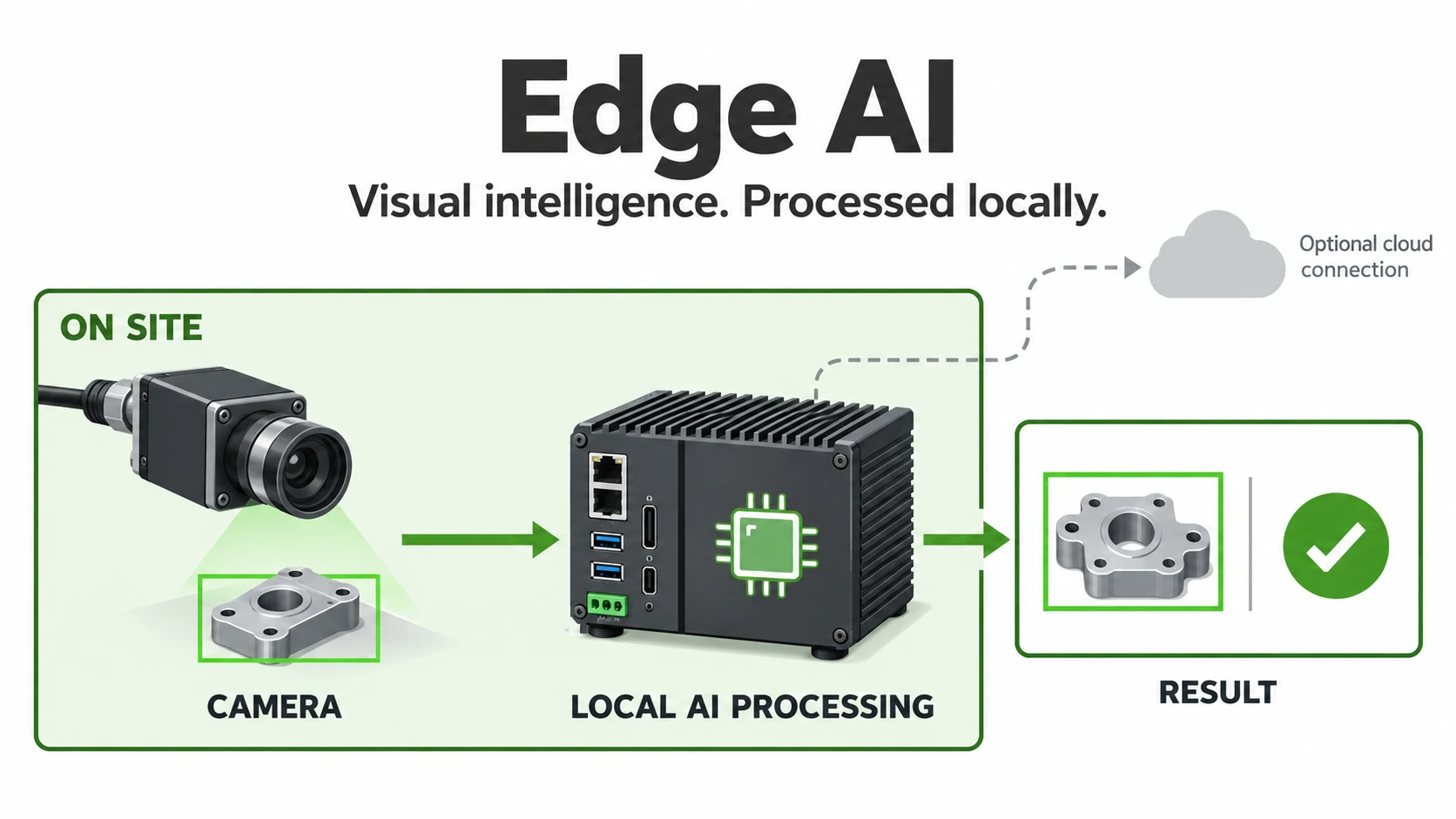
Edge AI brings image and video analysis closer to where the data is generated, allowing businesses to turn visual information into actionable insights locally.
For organisations working with continuous video streams, sensitive environments and time-critical processes, this approach offers clear advantages: faster responses, greater control over visual data and less dependence on external connectivity.
Faster Insights. More Responsive Operations.
Sending video to a remote server introduces a journey: upload the data, process it and return the result.
Edge AI shortens that journey by running analysis on local computing hardware, close to the camera or application. Reducing the need for a cloud round trip helps minimise communication delays and supports more responsive operations.
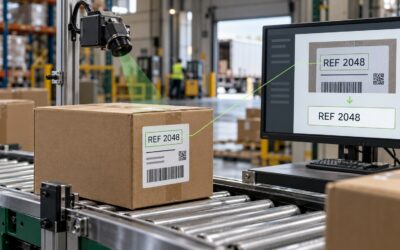
For visual applications, that can mean identifying a quality issue while an item is still on the production line or flagging an event while it is unfolding.
When timing matters, processing closer to the source creates a practical advantage.
NVIDIA’s introduction to Edge AI explains how local analysis reduces communication delays and supports real-time insights.
Keep More Visual Data Under Your Control
Images and video can reveal much more than the object an application is designed to detect. People, movements, operational routines and sensitive business information may all appear within a frame.
Edge AI makes it possible to analyse that information locally and share selected results, such as an event notification, object count or status update, instead of continuously transmitting complete video streams.
This gives businesses more control over what leaves their premises and helps limit unnecessary movement of sensitive visual data.
Process locally. Share what matters. Keep greater control over your information.
Less Video Traffic. More Efficient Infrastructure.
Continuous video transmission places demands on network capacity, especially when multiple cameras or high-resolution streams are involved.
By analysing video locally, an Edge AI system can reduce the amount of information that needs to travel across the network. A central platform can receive relevant findings without having to receive every frame.
This can ease bandwidth requirements and reduce costs associated with transferring and centrally processing large volumes of video.
For businesses expanding visual intelligence across multiple locations, that means an opportunity to grow without increasing video traffic at the same rate.
Intel’s overview of Edge AI describes how local processing can reduce bandwidth consumption and demand for cloud resources.
Reduce Dependence on Continuous Connectivity
Operational environments do not always offer a stable, high-bandwidth internet connection.
Industrial sites, remote infrastructure and mobile applications can all face connectivity constraints. When local analysis is designed to operate independently, an interruption to the internet connection does not have to interrupt the core visual processing.
That makes Edge AI especially valuable where timely insights are needed on site, even when communication with external systems is limited.
Local processing gives businesses a stronger foundation for continuity in demanding environments.
Built Around Real-World Visual Applications
The advantages of Edge AI become tangible when connected to everyday operational needs:
- Quality control: analyse products close to the inspection point and flag potential defects.
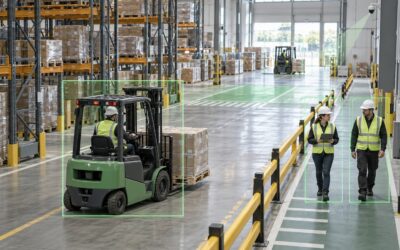
- Workplace safety: identify relevant visual events near the processes being monitored.
- Perimeter protection: detect activity locally and send selected alerts to security teams.
- Traffic and parking: turn camera streams into useful information about vehicles, occupancy and movement.
- Logistics: support visibility into goods, flows and operational activity.
Across these applications, the principle is the same: place visual intelligence where it can deliver useful results quickly.
airis:net: Proprietary Visual AI at the Edge
At airis:net, we develop visual AI solutions for real-time image analysis and computer vision, including solutions deployed at the edge.
Our self-developed, high-performance framework provides the technological foundation. Independence from Google, Amazon and Meta AI frameworks gives us control over development, optimisation and the direction of our technology.
For customers, that means working directly with the specialists behind the solution.
We combine this proprietary AI framework with custom solution architecture, tailoring visual computing to the requirements of applications in industry, security, infrastructure and mobility.
Our technology. Your application. Intelligence close to the action.
Edge and Cloud: Put Each Workload Where It Creates Value
For applications that need immediate local analysis, Edge AI offers compelling advantages. Cloud resources can complement that processing through central reporting, aggregated insights and coordination across locations.
A well-designed architecture can keep time-sensitive analysis close to the cameras while making relevant information available to the wider business.
The starting point is your application: how quickly it needs results, which data should be shared and how the system should operate in its environment.
Intel describes this complementary approach as hybrid Edge AI. For another perspective on deployment and data control, read why German-hosted AI matters.
Bring Visual Intelligence to Your Operations
Visual AI delivers its greatest value when it fits the way your business works.
Edge AI brings processing closer to your cameras, your processes and the moments that matter, helping you improve responsiveness, manage video traffic and retain greater control over visual information.
With proprietary technology and expertise in real-time computer vision, airis:net helps turn those opportunities into solutions tailored to your needs.
Discover what visual AI at the edge can do for your business. Contact airis:net to discuss your project.
Edge AI: Frequently Asked Questions
What is Edge AI in visual computing?
Edge AI runs image and video analysis on local computing hardware close to the camera or application. It turns visual data into useful results without requiring every frame to be sent to a remote cloud server.
How does Edge AI support real-time computer vision?
Local video processing reduces the communication delays associated with sending video to a remote server and waiting for a result. This supports applications where timely detection and response matter.
How can Edge AI improve control over visual data?
An Edge AI architecture can keep video processing on site and send only selected results, such as alerts or counts, to other systems. This reduces unnecessary video transfers and supports AI data privacy.
Can Edge AI work without an internet connection?
An edge system designed for autonomous local analysis can continue its core processing without an internet connection. Connectivity requirements for reporting, updates and other functions depend on the deployment.
Does Edge AI reduce bandwidth and operating costs?
Processing video locally can reduce continuous video uploads, lowering bandwidth requirements and some central processing costs. Overall costs depend on the hardware, workload and management requirements.
Can edge computing and cloud services work together?
Yes. Local analysis can provide time-sensitive results while cloud services support central reporting, aggregated insights or coordination across locations. The architecture should reflect the application’s requirements.
Does airis:net offer visual AI solutions at the edge?
Yes. airis:net develops visual AI solutions for real-time image analysis and computer vision, including edge deployments, using its self-developed framework and custom solution architecture.
How can I discuss an Edge AI project with airis:net?
Contact airis:net to discuss your cameras, visual analysis goals, response times and deployment environment. The team can assess how a tailored visual computing solution could support your application.